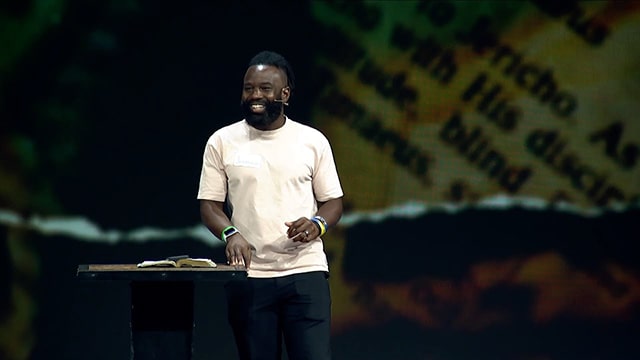
What Is Your Heart Condition?
Growing In Faith: Lessons From The Parable Of The Sower
Ross Sawyers
Aug 25, 2024 43m
Are you wondering why your faith isn't thriving? The lessons from the parable of the sower offer profound insights into the condition of our hearts. This message explores how different soil types represent various heart conditions, helping you identify barriers to spiritual growth. Learn how to cultivate good soil in your heart, allowing God's word to take root and produce abundant fruit in your life. Video recorded at Grapevine, Texas.
Daily Devotionals
More From This Message
Ross Sawyers: [00:00:26] I don't know if you read surveys very often, but there was one recently released by the Pew Research Center that studies religion in America, and some of you might have seen it a few weeks ago. But one of the things that this study says is that 63% of Americans today would say they're Christian, and that's down from 90% who would have said they were Christian in the 1990s. So in less than 30 years, that's a 27% decline in those who would actually just claim that they're Christians; 28% would say now that they're either agnostic, meaning they just don't believe that God is knowable, or that they're atheists, that there is no God; or they describe themselves as, quote, nothing in particular. One of the things that the survey notes is that the 18 to 24-year-old young women in Gen Z are now leaving the church at a faster rate than young men. Prior to, this particular study as a norm, it's been men who are leaving the church more rapidly than the women. But now with Gen Z, we're seeing a switch in that exodus.
Ross Sawyers: [00:01:45] I share that to say one, it's unfortunate, but two, it also indicates the condition of a heart, and that's what I'd like us to think about in Mark chapter 4 today, is the condition of our hearts. We'll be in chapter 4, verses 1 through 20. If you have a Bible, let me encourage you to follow along in the Scripture. If you don't have a Bible, the verses will be on the screen. I'll summarize some things, I'll mention scripture that I don't have on the screen, I have a load of that today, and then there'll be some on the screen. So if you're a note-taker, just know that's kind of how we're rolling.
Ross Sawyers: [00:02:24] As we move through Mark, I'm trying to look at different attributes of Jesus. For example, we won't do every story on healing; we'll do one story on healing and acknowledge the other stories of healing. And we've talked about Jesus as the Son of God. We've talked about Jesus having the power and authority to forgive sin. And today, I'd like us to think about Jesus as a master storyteller. In Mark chapter 4, there are a number of stories he tells, this is one that is crucial to understanding, actually, some of his other stories. If you're interested in chapter 3 of Mark, we just finished a series on the Ten Commandments, I talked about the Sabbath in that series. That's a big part of Mark 3, as we've already spent some time on that recently, that's why I've chosen to move on to chapter 4 in Mark.
Ross Sawyers: [00:03:20] So the question I want to ask this morning of you and for you to think about your family and friends, people you work with, people you do recreational things with, whatever it is, is what is the condition of your heart? And I don't want us to jump to the condition of someone else's heart before we take a look at the condition of our own heart in light of this particular story in Mark chapter 4. I don't want you to think today in terms of your opinion, your feelings, or your tradition, I want us to just look at what the Scripture says afresh and see if Jesus might have something to say to us today about the condition of our heart through a story that he told.
Ross Sawyers: [00:04:03] The setting for the story. I just want to summarize verses 1 through 9, and just give it to you in the story. Jesus is sitting on a boat, he has a large crowd that's gathered along the seashore, it seems there's a little bit of a gap between the boat, the water, and the large crowds that had gathered. And as he begins to speak my understanding is, true or untrue, I don't know, that there's good acoustics when it's set up like that. So Jesus is speaking to them, and he tells them a parable. Now, a parable means to lay alongside of, it's a story that takes something that is known in order to show something that's unknown, it's a common everyday story that can show a spiritual truth or spiritual truths. And Jesus does this often, using parables in his teaching. So he's teaching, and this is the story he tells. He talks about a sower who's going to sow seed. A sower would also, you can just think of it as a farmer and the seed that's being sowed, it's the scattering of the seed. So the farmer is scattering seed with the hopes that it will produce a strong crop. In this story, Jesus describes four different conditions of soil, and in these different conditions of soil. he will then tell a spiritual truth or truths that follow from it.
Ross Sawyers: [00:05:40] First, he describes a seed that falls on hard soil on the side of the road, and it's been packed down. The roads would separate the farmer's land, and they'd be walking along that road, pack it down, and when someone's scattering seed, the seed will get on that road. And he says the birds come and snatch up that seed, so it never takes root, or it never bears out any kind of fruit, that's the first kind of soil.
Ross Sawyers: [00:06:11] The second soil is a rocky kind of soil. And on that soil, it's thinner because of all the rocks that are mixed in with it. The seed kind of lands on that, but because it's shallow, it can't really get in and get root, and it takes no root, the sun scorches it, and therefore there's no root and there's no fruit that comes out of that particular seed.
Ross Sawyers: [00:06:37] So there's the hard soil, and then there's that rocky soil. The third soil he describes is that of a thorny kind of soil. And the seed is planted, it's thrown out, it's scattered, it lands on it, and because the thorns are so abundant, it squeezes out the possibility of any crop coming through. So the thorns kind of choke it out, the scripture says.
Ross Sawyers: [00:07:04] But there's a fourth soil, so it's not just the hard soil and the rocky soil and the thorny soil, there's a fourth soil. And that fourth soil is described as good soil, and when the seed lands in that soil, it seems like it's been cultivated, it's ready to receive the seed; that seed then takes root and it produces fruit; and the way Jesus describes it, it's 30-fold, 60-fold, 100-fold, and that's an incredibly abundant kind of crop. As a norm, a really good crop would be 5 to 15-fold, so Jesus is describing that when this seed hits the soil, really good soil, then there's this crop that's just stunning that comes out of it. So he tells this story. A couple of things to note in the story. The seed is the same seed. He's throwing the same seed, it's landing on different kinds of soil, and depending on the soil determines how the seed actually takes root and then produces fruit: same seed, different soils.
Ross Sawyers: [00:08:17] Jesus then says, listen to what it is that I've just said to you and take note, "He who has ears to hear, let him hear." And throughout this parable, Jesus is saying, look, listen with understanding. Listen in a way that requires thinking on your part and my part, and then respond to what it is that you hear me say, that's what Jesus is saying. He says that in verse 9. This is the everyday story in that culture where they were, they were probably looking at a field when he was telling the story. If they just looked behind them, they would see the thing he was talking about, so it would be really clear in their minds. For many of you, you have agricultural backgrounds, so when you hear stories like this, it connects with you and you understand it. There are some of us that didn't grow up in an agricultural kind of vibe, and it's a little more of our imagination to understand how this actually works, but we can still grab hold and understand.
Ross Sawyers: [00:09:25] Well, then Jesus goes on to say what the purpose of parables is. So right in the middle, before he explains this, he then explains the purpose of the parables. Verse 10, "As soon as He was alone, His followers, along with the twelve, began asking Him about the parables." So those who were followers of his, we find in Luke around this same story that Jesus had some women who were following him, his 12 disciples were following him, and there were others that were following him as well. They pull him aside, and I think they were probably thinking we should have understood what you just said and been able to figure out what the reason is that you just told this story, but we don't know. It would be like in here if I just said, hey, do you have any questions? A few of you might be willing to raise your hand and ask a question, but you might wait and grab me in the hall and say, hey, when you said this, what did you mean by that? It's the same in our life groups, that gives us a great opportunity to ask questions in that small group environment. You might not be comfortable there, but if you can pull the leader aside, or somebody else in the group aside and say, hey, I didn't really understand what was just happening there, can you explain that to me? That's what's happening here. Big crowd, Jesus tells the story, and the disciples say, hey, can you help us out a little bit here?
Ross Sawyers: [00:10:45] "And He was saying to them, in verse 11, to you has been given the mystery of the kingdom of God, but those who are outside get everything in parables." What he's saying to them is that they're receiving the mystery. And when we read mystery in Scripture, it's taking that which has been unknown and now it's becoming known. So throughout the Old Testament, we see where a Messiah is coming, a Savior is coming. Jesus is here, and he said, the kingdom has arrived, and now they're getting to see what it is to be a part of the kingdom. And he's making it clear to them through parables. For someone that understands, and is following, they'll understand it. But those who are hard-hearted and aren't interested at the outset, they won't understand what's being taught.
Ross Sawyers: [00:11:33] Some would say verse 12, here is one of the most difficult verses to understand in the scriptures. He says, "So that WHILE SEEING, THEY MAY SEE AND NOT PERCEIVE, AND WHILE HEARING, THEY MAY HEAR AND NOT UNDERSTAND, OTHERWISE THEY MIGHT RETURN AND BE FORGIVEN.” And you say, well, I thought that was the whole point that he wanted people to turn to him and be forgiven. He's quoting Isaiah 6, verses 9 and 10. And when God calls Isaiah out to be his prophet, he's calling him to a people where he'll proclaim God's message again and again and again to a hard-hearted people. He'll be scattering seed, he'll be throwing this out, and most of the time they are not going to respond to it, but still, he's to throw it out there to them. And what the Scripture tells us is that those who are hard-hearted, they might see it, but they're not going to perceive it, they may hear it, but they're not going to understand it, and it's concealed from them because of their hard hearts.
Ross Sawyers: [00:12:42] In verse 13 and following, then he starts to explain the story, this is where I want to spend the bulk of our time. You have the story, you see Jesus's purpose in parables for those who are his followers, they're to give more insight, depth, and growth into what it is to be his and to be a part of the Kingdom. For those who are outside or hardened, they'll not understand what's being said. And I want us to ask ourselves the question very clearly as I began, as we hear the story unfold, what is the condition of your heart? And Mark speaks with an urgency, and it would be incumbent on us to know the condition of the hearts of those who are around us, in our families, our friends, who we work with, who we play with. God has placed us in a position with so many different people, where we're to scatter the seed for those who are followers of Jesus. So here's the story explained. And by the way, this week I've had a lot of fun, I've talked to a variety of people, and it is really interesting how many different ways people understand this parable. And the way I lay it out, you might find yourself in disagreement with me, and I would encourage you, if you do, from Scripture, go wrestle with it if there's a different way that you understand it, but come from Scripture as you're wrestling with it. And I'll explain to you why I understand it the way that I do as I've wrestled through it.
Ross Sawyers: [00:14:25] So here's the story explained. Verse 13, "He said to them, “Do you not understand this parable? How will you understand all the parables?" I've skipped over this part, I think, in the past, or if I've said it, I forgot that I have. But Jesus says this parable is key to understanding the other parables. We need to understand this parable, and when we understand this one, our eyes will be open to better understand the rest of his parables. So we want to understand this parable and the truth that Jesus was teaching through it.
Ross Sawyers: [00:15:04] So in verse 14, he begins to explain it, "The sower sows the word." So we know then that the sower is the preacher. The sower is the believer. The sower is the one who is scattering the Word of God, that's the seed, it's God's word. What would be the core of what we would be scattering? Well, we know in Luke 4, that Jesus had come to preach the Gospel to the poor. He came to preach good news to them, and he came to let the oppressed know there could be freedom, to let the captives know there could be liberty, and to let the blind know there could be sight; he came to proclaim the favorable year of the Lord. So we at least know that he came to preach what is the good news? And the good news is actually himself, and his life, and what he would do on the cross, and in the resurrection. So who are the sowers? I would say today, if you believe you're a follower of Jesus Christ, then you're the sower today. And if the seed, the Word of God has landed in good soil in you, then you become the sower. In Deuteronomy 6 it says, for parents, that it's your job. It's not the Christian school's job, it's really not, at the end of the day, the church's ultimate job, it is the job of parents to not leave it up to everybody else to do it, it is the parent's job to bring God's Word to their children, to teach diligently in Deuteronomy 6, when they rise up, as they walk through the day, when they sit down, and before they go to bed, that's all the time. It's the parent's job to be scattering the Word of God onto and in their children. Yes, schools are helpful; yes, the church is helpful in that; it's the parent's job to do it.
Ross Sawyers: [00:17:01] In Colossians 4, we're told to make the most of every opportunity with outsiders. It's our job for the people outside to let them know the message of Jesus Christ, that's your job, and my job. There are a number of ways for us to do this, but that is what we've been given the privilege really to do. What is that word? I would say it's very simply this, God loves you, you're sinful and separated from God, and so was I. Jesus Christ died on the cross for you to take your sins, and God raised him from the dead. If you confess with your mouth, that Jesus is Lord, and believe in your heart that God has raised him from the dead, you'll be saved. That's some simple statements about who he is, and that's what gets me moving. Jaden, who we just baptized, that's what happened with her, she's in, and now she's growing. God's word landed in a good place in her, that's one way to share the word. We can do it with our written story, our verbal story, we can do it in our life group teaching, we can do it in worship gatherings like this, we can go through social media, we can scatter God's Word in so many different ways, and you never know where it might land. But here are the four places that it does land according to Jesus.
Ross Sawyers: [00:18:47] And I would ask this question in a very direct way. Is your heart hard? Is your heart hard? In Jeremiah chapter 17, verse 9, it says, “The heart is more deceitful than all else and is desperately sick; who can understand it?" This parable is about the heart. When we talk about the soils, the soils represent the human heart. And this explanation that Jesus gives about the hard soil is a direct tie to a heart that's hardened. In verse 15, “These are the ones who are beside the road where the word is sown; and when they hear, immediately Satan comes and takes away the word which has been sown in them." This is that the message goes out about Jesus, but Satan comes in and snatches it before it can ever get into the person. In Second Corinthians 4:4 it says that Satan blinds the minds of the unbelieving. In John 10:10 it says, "The thief comes to steal, kill, and destroy." Satan is coming to steal away God's Word before it ever lands and hits in the human heart. That's the hard-hearted person. This is the person in Romans 1, that is chosen to suppress the truth rather than to believe the truth. This is the person who in First Corinthians 1:18 believes the cross is foolishness and not the power of God for salvation. This is the self-sufficient person who doesn't believe they need God. A hard heart.
Ross Sawyers: [00:20:33] I saw this evidence very clearly when I was in Pensacola, this is probably the first time that I saw this. I can see the man's face today as if I was sitting in that restaurant with him right now, I walked through the message of Christ with him, he was a neighbor, and we built a relationship over time. He was an attorney. He had an uncle who was a pastor. He knew this message, he could speak it, he could stand up here, and he would do a better job than me of laying out for you the Gospel of what it means to know Jesus. And I sat across from him about this far, and we're just looking at each other just like this. I'm walking through the Gospel with him, and I'm looking at him, and I just see a face that is blank, it's just blank. And he understands the words I'm saying, and his uncle has said, but there is nothing going on in his heart, it is hardened towards Jesus. Satan blinds the minds of the unbelieving, and sometimes when we put the word out there, somebody just looks at us. Well, they might change the subject, they might be done and walk off, but it doesn't mean we don't scatter the seed, we don't know what the soil is like inside of a person. Once the seed is scattered, we start to get a hint.
Ross Sawyers: [00:22:16] The second kind of soil is, what I'm going to describe as, emotional. I recognize we all have emotions. I think you'll understand as we look at this parallel. This is the rocky soil, it's thin soil, and the seed couldn't take root. Jesus said in verses 16 and 17, “In a similar way these are the ones on whom seed was sown on the rocky places, who, when they hear the word, immediately receive it with joy; 17and they have no firm root in themselves, but are only temporary; then, when affliction or persecution arises because of the word, immediately they fall away." By the way, just to make sure before I leave, is the heart hard? The reason I believe this parable is about salvation is because in Luke when he describes it, he says, Satan takes it away from the heart so that the person cannot believe and be saved. That's how Luke writes this parable. So we know he steals away that salvation. In this second one, the emotional one, the person hears this message, it sounds really good to them, and you get heaven out of it, because that's oftentimes what we stress is that if you'll trust Jesus and pray a prayer, then you're going to have heaven. Well, a lot of people get fired up about that, if there's any belief about an afterlife, you say, oh, that's awesome. And so they hear it, and I would say this is more like, perhaps you like the idea of Jesus, like it sounds good, the benefit sounds good; I think I'm in on that. And so were the large crowds initially with Jesus, they loved what they were getting out of him, how they could get healing out of him, or they'd get demons out of them, they loved what they could get out of him. But there are some teachings of Jesus that I don't understand why people love the teachings of Jesus. In Luke 9:23, "He said, “If anyone wishes to come after Me, he must deny himself, and take up his cross daily and follow Me." The way of Jesus is to deny ourselves, to take up our cross and follow him, it's following him.
Ross Sawyers: [00:24:29] In Luke 14:26, “If anyone comes to Me, and does not hate his own father and mother and wife and children and brothers and sisters, yes, and even his own life, he cannot be My disciple." There's not a lot of gray with Jesus. Is he saying you should hate your father and mother? No, it's hyperbole. The priority relationship is Jesus and the families next. He actually says in Scripture that oftentimes he'll be a divider in a family. This could be people who were fine with Jesus until they decided to change their sexual ethic, it doesn't quite square up, so now I'm not going to square up with Jesus. It all sounded good until I had to stand firm on what marriage is, and I never realized that was going to cause havoc in my workplace. I think I'm going to let go of Jesus, that seems a little bit easier, I just want peace and everybody to be happy. So we're fired up about it until there's something to stand for.
Ross Sawyers: [00:25:44] Somebody sent me a sermon this week and thought it was really timely. One of the things that he said is a guy probably in the 1960s, it's good to go back and listen to old guys preaching, by the way. And he said, somewhere in the early 1900s, Christianity became an assent to a few statements. Now, that's what I said a minute ago, didn't I, about the Gospel? I just made a few statements. What he means is what happened is we started saying, God loves you, you're a sinner, Jesus died for you. All you have to do is pray this prayer, ask Jesus into your heart, and then you're going to go to heaven. And you say yes, and you assent to that, but again, then you realize, oh, there was more to this? I just thought I was praying a prayer, I believed Jesus, and I go about my own life. What do you mean, deny myself, take up my cross, and follow you? R.C. Sproul said it this way; a theologian, he said, "Apparently in America all you have to do is die to go to heaven." You understand that if you've been to a funeral where you hear the preacher talking and you're thinking, who is that? I was in a funeral one time, and I was preaching, and I said I wasn't sure if the person was a believer or not. And I said, you know, if he could come back, I know this is what he would say. The guy sat right back over there, and he just looked at me. No, that's not who my friend was, that's not what he would say. I just kept going, this is what he would say. We have a chance to come back, and we know this from Scripture, there's a conversation that goes on, and there will be a different story when we get on the other side. So is your heart emotional? The idea of Jesus sounded really good, or there are people in your family or friends, and it sounded really good at the outset, but are not really when there's trouble and things aren't going the way I thought they were going to go.
Ross Sawyers: [00:28:09] Third heart condition, is your heart distracted? In verses... And I would say, by the way, those first two are not Christians. We might struggle with the idea of troubles or persecution in our Christian life, but if the predominant thing is I'm out because of this, that person's not a believer. In verses 18 and 19, others, these are the distracted ones, "Others are the ones on whom seed was sown among the thorns; these are the ones who have heard the word, 19but the worries of the world, and the deceitfulness of riches, and the desires for other things enter in and choke the word, and it becomes unfruitful." Luke, when he writes his story, says they never reach maturity. So here's that seed that hits, and the thorns kind of choke it out. Well, what are the thorns he's talking about? You hear God's word, this all sounds good, I'm going to receive it and take it in. And by the way, this one, we need to take stock of in the culture we're in right here. We are in affluence, right here. Somebody told me this week when they read this parable, this one makes them nervous. I hear God's word, it sounds good. Man, I sure want to make that money. I sure want to live in that neighborhood. I sure want to travel to these places. I sure want my kids to have everything they can possibly have, so we need to work as many hours as we can possibly work to make sure they've got it, and there's no time for Jesus. He gets choked out by constant worry and constant chasing of wealth and entertainment.
Ross Sawyers: [00:30:01] Somebody sent a devotional to me this week. Satan called a Worldwide Convention of all his demons. And he said, you know what, we can get people to go to church, people can go to church, we can't stop that. They're going to read their Bibles at least every once in a while, we can't stop that. They're going to do some good things and serve in the community; we can't stop that. But I tell you what we can do, we can cut off their connection to Jesus. So how about let's try it this way, what if we steal their time? Get them busy with non-essentials. Evoke them to spend, spend, spend, then borrow, borrow, borrow. Get them to work long hours and fragment their families. Overstimulate their minds and pick up their phones all the time. Pound their minds with social media and news 24 over seven. Invade their driving moments with music and podcasts and audiobooks. Invite them into perversion. Let them be excessive in their recreation and return from holidays and vacations exhausted. Let them go to their small groups and spend time gossiping on small talk instead of getting in the word. Get them involved in good causes, but make sure there's no time left for them with Christ. And the writer of the devotion said, is his scheme working?
Ross Sawyers: [00:31:42] In Luke 14:33, Jesus said, "None of you can be my disciple who does not give up all his own possessions." How loose are we really holding on to our stuff? If Jesus were to approach us like the rich young ruler, who said, I'm doing everything told, I'm following your commands, I'm doing this and that. Jesus said, there's a heart problem, give up all your possessions, sell them, and give them to the poor, then follow me. He went away saddened, the rich man did, because he had a lot. And you know what? Jesus didn't go chasing after him. First John 2:15 says, "Do not love the world nor the things in the world. If anyone loves the world, the love of the Father is not in him." Neil Postman wrote a book in 1985 called Amusing Ourselves to Death. The more money we have, the more opportunities there are to buy things, the more opportunities there are to fix things, the more opportunities to be distracted, the more opportunity there is for entertainment, the more opportunity to be robbed of the real riches of being in Jesus. The disciples said when they heard about the rich guy, they said, hey, well then who can be saved? Jesus said, with man it's impossible, with God it's possible. But God can reach in and bring that rescue. But I don't believe this third one is a Christian. Do we struggle with worries? Do we struggle with wealth and so forth? Absolutely, those are battles, but if that's the predominant thing, and there's no time for abiding and deepening in a relationship with Jesus, if there's no fruit that's coming out of your life because of all the things that are being choked out, we at least need to be willing to ask the question, is my heart is so distracted that I really don't believe Jesus is Lord, I really believe all this other stuff is Lord, and that's what I'm going to serve?
Ross Sawyers: [00:33:55] But there's a fourth soil, and the fourth soil is is your heart ready? And this is where I would make the case for why I believe the other three soils are not believers. is based on what Jesus says in this one and other things throughout Scripture, “And those are the ones on whom seed was sown on the good soil; and they hear the word and accept it and bear fruit, thirty, sixty, and a hundredfold.” So this was the soil that received the seed, and so this is the human heart equivalent that has been cultivated in a way that it can actually receive the good news of Jesus when it's heard. And it's received in such a way that it takes root, and it takes root in such a way, then it starts to bear out fruit. So what does this actually mean when I say that? Matthew says this is the person who understands it. Luke is the one who says hears it and it lands on an honest and good heart that holds it fast and bears fruit with perseverance. No matter what hardships come along, no matter what persecution comes along, no matter what distractions come along, this person is rooted in Jesus and their life is bearing out fruit that looks like Jesus. In John chapter 10, Jesus said, "I came that they might have life, and might have it abundantly." So Jesus has called us to live abundant lives.
Ross Sawyers: [00:35:22] I was talking to somebody one time, and I was asking somebody if they thought they were a believer or not. And they just kept talking and talking and trying to say, well, I think and this and that. And I said, gosh, if we're having to spend this much time trying to figure it out, maybe he's just not. It seems somewhat clear from Scripture of what someone is as a follower of Jesus, and Jesus is looking for followers. Not just mental assent, but a mental assent that causes me to love him, to honor him, to value him, to follow him. And when I do that, I start to look like him, and that's what fruit bearing is. In John 15:5, Jesus said, “I am the vine, you are the branches; he who abides in Me and I in him, he bears much fruit, for apart from Me you can do nothing." So Jesus says, if you want to bear out fruit, if it landed on good soil, then we'll abide or remain and depend on him; as we do that, he starts to bear out his character in and through us. And he says, we can't do anything, we can do nothing apart from him nothing. So good fruit is when we are abiding in him, and he's doing things through us and changing our character. In John 15:8, Jesus says, you'll prove to be my disciple by the fruit that you bear out. He just says this is what proves you're a disciple of mine, is that fruit is bearing out. In Galatians 5:22 and 23, this is the fruit, the fruit of the Spirit. The Spirit indwells you when you know Jesus, love, joy, peace, patience, kindness, goodness, faithfulness, gentleness, and self-control. Before we're doers, we're becomers, we're becoming more like Jesus in these realms. The more I'm with him, the more patient I become, the more joyful I become, and the more loving I become. Not the cultural definition of love, a sacrificial kind of love, the more gentle I become, the more self-controlled I become, it's a lifelong growing and increasing in being like Jesus.
Ross Sawyers: [00:37:51] In Colossians 1:9-10, Paul prays a prayer, and he says in this prayer that we're to bear fruit in every good work. So as we become like him, then out of who we are will flow the good works, and we're to increase in the knowledge of God. And I love the word of increase, because once a person comes to know Jesus, then we start to increase in the way we look like Christ and in our obedience to Christ. It's over a lifetime, but I'm increasing. It's a good question to ask ourselves, have I been increasing in looking like Jesus over time?
Ross Sawyers: [00:38:25] And then there are some things to be warned about in First John 3:8-10, he actually says, if we know Christ will not practice sin. You say, well, wait a minute. I'm still battling sin. So am I, by the way. But there's a difference in I'm battling and fighting that sin, and I've embraced that sin, major differences. In a person that's bearing out fruit, we will be fighting sin not embracing sin. In Colossians 2:6-7, he says that we are to be firmly rooted in Christ and to overflow with gratitude. And then Jesus says in Matthew 7, that you're going to know followers of Jesus by their fruit, a good tree bears good fruit, a bad tree bears out bad fruit. You say, well, okay, you're still saying those other three are not Christians. I just think the way he talks about bearing fruit and being a disciple actually indicates who the Christians are. And then Jesus would say things like this in Matthew 7, it's the broad road that leads to destruction, it's the narrow road that leads to life. If all of these soils, except for the first one, are the way to Jesus, that feels really broad. Somebody said what about the thief on the cross, he didn't have time to bear fruit? I bet it was the most grateful hour of his life. We're not expected to bear fruit until we first know Jesus, and then we start to increase and bear out that good fruit, that character of Jesus, and the ways of Jesus from the time he lands on good soil in us. And so I would ask, what is the condition of your heart What about your friends? And what about your family?
Ross Sawyers: [00:40:37] Life groups, this week, I challenge you. Will you have a conversation? We need to ask good in-depth questions like what do you believe about Jesus? Who do you believe Jesus is? And let people talk, not yes and no questions, open-ended questions. What do people really believe? It's really interesting when we start asking questions like, when's the last time you had a conversation with your adult child or children and just asked them, who's Jesus to you? What do you think about the cross? How is that impacting your life? What kind of fruit do you see bearing out in your life? Are you rooted in Jesus? We want to be ones who cultivate, sow, and scatter seeds. In the way that we pray, we can be a part of tilling up the ground. Sometimes God uses hard things, like an injury to a young lady who had her whole swimming career taken away from her, but the ground became good soil in her to receive Jesus. Christ.
Ross Sawyers: [00:41:54] Father, thank you for our space in your word. You challenge us with your teaching. And I pray, Father, we would not be light-hearted in it. God, that we would take a hard look and ask you to search our hearts, God. And has your Word landed as the message of Jesus landed on good soil in us? If not, then it's our prayer today, God, that you would loosen the soil so that it can be received, that it can take root, and then it can grow. And, God, it will produce the character of Jesus in the ways of Jesus. We ask, God, that we would be a people who continue to increase in the way we look like you. God, help us be a people that are bold about throwing the word out there to see where it lands. And so, God, thank you for the privilege of being a farmer in your Kingdom. I pray these things in Jesus' name.
Ross Sawyers: [00:42:56] Let's just have a moment or two to consider what kind of heart we have. Is it the heart, an emotional, distracted, or a ready heart to receive the Gospel? And then, what does that look like now as God continues to work, in and through you, if he is? And then if not, would this be a day that you say, you know what, I want him to. And feel free to pull us aside, just like the disciples did with Jesus, and we'd love to have a conversation with you. But let's be quiet for a moment and consider these things.
Recorded in Grapevine, Texas.
Ross Sawyers: [00:01:45] I share that to say one, it's unfortunate, but two, it also indicates the condition of a heart, and that's what I'd like us to think about in Mark chapter 4 today, is the condition of our hearts. We'll be in chapter 4, verses 1 through 20. If you have a Bible, let me encourage you to follow along in the Scripture. If you don't have a Bible, the verses will be on the screen. I'll summarize some things, I'll mention scripture that I don't have on the screen, I have a load of that today, and then there'll be some on the screen. So if you're a note-taker, just know that's kind of how we're rolling.
Ross Sawyers: [00:02:24] As we move through Mark, I'm trying to look at different attributes of Jesus. For example, we won't do every story on healing; we'll do one story on healing and acknowledge the other stories of healing. And we've talked about Jesus as the Son of God. We've talked about Jesus having the power and authority to forgive sin. And today, I'd like us to think about Jesus as a master storyteller. In Mark chapter 4, there are a number of stories he tells, this is one that is crucial to understanding, actually, some of his other stories. If you're interested in chapter 3 of Mark, we just finished a series on the Ten Commandments, I talked about the Sabbath in that series. That's a big part of Mark 3, as we've already spent some time on that recently, that's why I've chosen to move on to chapter 4 in Mark.
Ross Sawyers: [00:03:20] So the question I want to ask this morning of you and for you to think about your family and friends, people you work with, people you do recreational things with, whatever it is, is what is the condition of your heart? And I don't want us to jump to the condition of someone else's heart before we take a look at the condition of our own heart in light of this particular story in Mark chapter 4. I don't want you to think today in terms of your opinion, your feelings, or your tradition, I want us to just look at what the Scripture says afresh and see if Jesus might have something to say to us today about the condition of our heart through a story that he told.
Ross Sawyers: [00:04:03] The setting for the story. I just want to summarize verses 1 through 9, and just give it to you in the story. Jesus is sitting on a boat, he has a large crowd that's gathered along the seashore, it seems there's a little bit of a gap between the boat, the water, and the large crowds that had gathered. And as he begins to speak my understanding is, true or untrue, I don't know, that there's good acoustics when it's set up like that. So Jesus is speaking to them, and he tells them a parable. Now, a parable means to lay alongside of, it's a story that takes something that is known in order to show something that's unknown, it's a common everyday story that can show a spiritual truth or spiritual truths. And Jesus does this often, using parables in his teaching. So he's teaching, and this is the story he tells. He talks about a sower who's going to sow seed. A sower would also, you can just think of it as a farmer and the seed that's being sowed, it's the scattering of the seed. So the farmer is scattering seed with the hopes that it will produce a strong crop. In this story, Jesus describes four different conditions of soil, and in these different conditions of soil. he will then tell a spiritual truth or truths that follow from it.
Ross Sawyers: [00:05:40] First, he describes a seed that falls on hard soil on the side of the road, and it's been packed down. The roads would separate the farmer's land, and they'd be walking along that road, pack it down, and when someone's scattering seed, the seed will get on that road. And he says the birds come and snatch up that seed, so it never takes root, or it never bears out any kind of fruit, that's the first kind of soil.
Ross Sawyers: [00:06:11] The second soil is a rocky kind of soil. And on that soil, it's thinner because of all the rocks that are mixed in with it. The seed kind of lands on that, but because it's shallow, it can't really get in and get root, and it takes no root, the sun scorches it, and therefore there's no root and there's no fruit that comes out of that particular seed.
Ross Sawyers: [00:06:37] So there's the hard soil, and then there's that rocky soil. The third soil he describes is that of a thorny kind of soil. And the seed is planted, it's thrown out, it's scattered, it lands on it, and because the thorns are so abundant, it squeezes out the possibility of any crop coming through. So the thorns kind of choke it out, the scripture says.
Ross Sawyers: [00:07:04] But there's a fourth soil, so it's not just the hard soil and the rocky soil and the thorny soil, there's a fourth soil. And that fourth soil is described as good soil, and when the seed lands in that soil, it seems like it's been cultivated, it's ready to receive the seed; that seed then takes root and it produces fruit; and the way Jesus describes it, it's 30-fold, 60-fold, 100-fold, and that's an incredibly abundant kind of crop. As a norm, a really good crop would be 5 to 15-fold, so Jesus is describing that when this seed hits the soil, really good soil, then there's this crop that's just stunning that comes out of it. So he tells this story. A couple of things to note in the story. The seed is the same seed. He's throwing the same seed, it's landing on different kinds of soil, and depending on the soil determines how the seed actually takes root and then produces fruit: same seed, different soils.
Ross Sawyers: [00:08:17] Jesus then says, listen to what it is that I've just said to you and take note, "He who has ears to hear, let him hear." And throughout this parable, Jesus is saying, look, listen with understanding. Listen in a way that requires thinking on your part and my part, and then respond to what it is that you hear me say, that's what Jesus is saying. He says that in verse 9. This is the everyday story in that culture where they were, they were probably looking at a field when he was telling the story. If they just looked behind them, they would see the thing he was talking about, so it would be really clear in their minds. For many of you, you have agricultural backgrounds, so when you hear stories like this, it connects with you and you understand it. There are some of us that didn't grow up in an agricultural kind of vibe, and it's a little more of our imagination to understand how this actually works, but we can still grab hold and understand.
Ross Sawyers: [00:09:25] Well, then Jesus goes on to say what the purpose of parables is. So right in the middle, before he explains this, he then explains the purpose of the parables. Verse 10, "As soon as He was alone, His followers, along with the twelve, began asking Him about the parables." So those who were followers of his, we find in Luke around this same story that Jesus had some women who were following him, his 12 disciples were following him, and there were others that were following him as well. They pull him aside, and I think they were probably thinking we should have understood what you just said and been able to figure out what the reason is that you just told this story, but we don't know. It would be like in here if I just said, hey, do you have any questions? A few of you might be willing to raise your hand and ask a question, but you might wait and grab me in the hall and say, hey, when you said this, what did you mean by that? It's the same in our life groups, that gives us a great opportunity to ask questions in that small group environment. You might not be comfortable there, but if you can pull the leader aside, or somebody else in the group aside and say, hey, I didn't really understand what was just happening there, can you explain that to me? That's what's happening here. Big crowd, Jesus tells the story, and the disciples say, hey, can you help us out a little bit here?
Ross Sawyers: [00:10:45] "And He was saying to them, in verse 11, to you has been given the mystery of the kingdom of God, but those who are outside get everything in parables." What he's saying to them is that they're receiving the mystery. And when we read mystery in Scripture, it's taking that which has been unknown and now it's becoming known. So throughout the Old Testament, we see where a Messiah is coming, a Savior is coming. Jesus is here, and he said, the kingdom has arrived, and now they're getting to see what it is to be a part of the kingdom. And he's making it clear to them through parables. For someone that understands, and is following, they'll understand it. But those who are hard-hearted and aren't interested at the outset, they won't understand what's being taught.
Ross Sawyers: [00:11:33] Some would say verse 12, here is one of the most difficult verses to understand in the scriptures. He says, "So that WHILE SEEING, THEY MAY SEE AND NOT PERCEIVE, AND WHILE HEARING, THEY MAY HEAR AND NOT UNDERSTAND, OTHERWISE THEY MIGHT RETURN AND BE FORGIVEN.” And you say, well, I thought that was the whole point that he wanted people to turn to him and be forgiven. He's quoting Isaiah 6, verses 9 and 10. And when God calls Isaiah out to be his prophet, he's calling him to a people where he'll proclaim God's message again and again and again to a hard-hearted people. He'll be scattering seed, he'll be throwing this out, and most of the time they are not going to respond to it, but still, he's to throw it out there to them. And what the Scripture tells us is that those who are hard-hearted, they might see it, but they're not going to perceive it, they may hear it, but they're not going to understand it, and it's concealed from them because of their hard hearts.
Ross Sawyers: [00:12:42] In verse 13 and following, then he starts to explain the story, this is where I want to spend the bulk of our time. You have the story, you see Jesus's purpose in parables for those who are his followers, they're to give more insight, depth, and growth into what it is to be his and to be a part of the Kingdom. For those who are outside or hardened, they'll not understand what's being said. And I want us to ask ourselves the question very clearly as I began, as we hear the story unfold, what is the condition of your heart? And Mark speaks with an urgency, and it would be incumbent on us to know the condition of the hearts of those who are around us, in our families, our friends, who we work with, who we play with. God has placed us in a position with so many different people, where we're to scatter the seed for those who are followers of Jesus. So here's the story explained. And by the way, this week I've had a lot of fun, I've talked to a variety of people, and it is really interesting how many different ways people understand this parable. And the way I lay it out, you might find yourself in disagreement with me, and I would encourage you, if you do, from Scripture, go wrestle with it if there's a different way that you understand it, but come from Scripture as you're wrestling with it. And I'll explain to you why I understand it the way that I do as I've wrestled through it.
Ross Sawyers: [00:14:25] So here's the story explained. Verse 13, "He said to them, “Do you not understand this parable? How will you understand all the parables?" I've skipped over this part, I think, in the past, or if I've said it, I forgot that I have. But Jesus says this parable is key to understanding the other parables. We need to understand this parable, and when we understand this one, our eyes will be open to better understand the rest of his parables. So we want to understand this parable and the truth that Jesus was teaching through it.
Ross Sawyers: [00:15:04] So in verse 14, he begins to explain it, "The sower sows the word." So we know then that the sower is the preacher. The sower is the believer. The sower is the one who is scattering the Word of God, that's the seed, it's God's word. What would be the core of what we would be scattering? Well, we know in Luke 4, that Jesus had come to preach the Gospel to the poor. He came to preach good news to them, and he came to let the oppressed know there could be freedom, to let the captives know there could be liberty, and to let the blind know there could be sight; he came to proclaim the favorable year of the Lord. So we at least know that he came to preach what is the good news? And the good news is actually himself, and his life, and what he would do on the cross, and in the resurrection. So who are the sowers? I would say today, if you believe you're a follower of Jesus Christ, then you're the sower today. And if the seed, the Word of God has landed in good soil in you, then you become the sower. In Deuteronomy 6 it says, for parents, that it's your job. It's not the Christian school's job, it's really not, at the end of the day, the church's ultimate job, it is the job of parents to not leave it up to everybody else to do it, it is the parent's job to bring God's Word to their children, to teach diligently in Deuteronomy 6, when they rise up, as they walk through the day, when they sit down, and before they go to bed, that's all the time. It's the parent's job to be scattering the Word of God onto and in their children. Yes, schools are helpful; yes, the church is helpful in that; it's the parent's job to do it.
Ross Sawyers: [00:17:01] In Colossians 4, we're told to make the most of every opportunity with outsiders. It's our job for the people outside to let them know the message of Jesus Christ, that's your job, and my job. There are a number of ways for us to do this, but that is what we've been given the privilege really to do. What is that word? I would say it's very simply this, God loves you, you're sinful and separated from God, and so was I. Jesus Christ died on the cross for you to take your sins, and God raised him from the dead. If you confess with your mouth, that Jesus is Lord, and believe in your heart that God has raised him from the dead, you'll be saved. That's some simple statements about who he is, and that's what gets me moving. Jaden, who we just baptized, that's what happened with her, she's in, and now she's growing. God's word landed in a good place in her, that's one way to share the word. We can do it with our written story, our verbal story, we can do it in our life group teaching, we can do it in worship gatherings like this, we can go through social media, we can scatter God's Word in so many different ways, and you never know where it might land. But here are the four places that it does land according to Jesus.
Ross Sawyers: [00:18:47] And I would ask this question in a very direct way. Is your heart hard? Is your heart hard? In Jeremiah chapter 17, verse 9, it says, “The heart is more deceitful than all else and is desperately sick; who can understand it?" This parable is about the heart. When we talk about the soils, the soils represent the human heart. And this explanation that Jesus gives about the hard soil is a direct tie to a heart that's hardened. In verse 15, “These are the ones who are beside the road where the word is sown; and when they hear, immediately Satan comes and takes away the word which has been sown in them." This is that the message goes out about Jesus, but Satan comes in and snatches it before it can ever get into the person. In Second Corinthians 4:4 it says that Satan blinds the minds of the unbelieving. In John 10:10 it says, "The thief comes to steal, kill, and destroy." Satan is coming to steal away God's Word before it ever lands and hits in the human heart. That's the hard-hearted person. This is the person in Romans 1, that is chosen to suppress the truth rather than to believe the truth. This is the person who in First Corinthians 1:18 believes the cross is foolishness and not the power of God for salvation. This is the self-sufficient person who doesn't believe they need God. A hard heart.
Ross Sawyers: [00:20:33] I saw this evidence very clearly when I was in Pensacola, this is probably the first time that I saw this. I can see the man's face today as if I was sitting in that restaurant with him right now, I walked through the message of Christ with him, he was a neighbor, and we built a relationship over time. He was an attorney. He had an uncle who was a pastor. He knew this message, he could speak it, he could stand up here, and he would do a better job than me of laying out for you the Gospel of what it means to know Jesus. And I sat across from him about this far, and we're just looking at each other just like this. I'm walking through the Gospel with him, and I'm looking at him, and I just see a face that is blank, it's just blank. And he understands the words I'm saying, and his uncle has said, but there is nothing going on in his heart, it is hardened towards Jesus. Satan blinds the minds of the unbelieving, and sometimes when we put the word out there, somebody just looks at us. Well, they might change the subject, they might be done and walk off, but it doesn't mean we don't scatter the seed, we don't know what the soil is like inside of a person. Once the seed is scattered, we start to get a hint.
Ross Sawyers: [00:22:16] The second kind of soil is, what I'm going to describe as, emotional. I recognize we all have emotions. I think you'll understand as we look at this parallel. This is the rocky soil, it's thin soil, and the seed couldn't take root. Jesus said in verses 16 and 17, “In a similar way these are the ones on whom seed was sown on the rocky places, who, when they hear the word, immediately receive it with joy; 17and they have no firm root in themselves, but are only temporary; then, when affliction or persecution arises because of the word, immediately they fall away." By the way, just to make sure before I leave, is the heart hard? The reason I believe this parable is about salvation is because in Luke when he describes it, he says, Satan takes it away from the heart so that the person cannot believe and be saved. That's how Luke writes this parable. So we know he steals away that salvation. In this second one, the emotional one, the person hears this message, it sounds really good to them, and you get heaven out of it, because that's oftentimes what we stress is that if you'll trust Jesus and pray a prayer, then you're going to have heaven. Well, a lot of people get fired up about that, if there's any belief about an afterlife, you say, oh, that's awesome. And so they hear it, and I would say this is more like, perhaps you like the idea of Jesus, like it sounds good, the benefit sounds good; I think I'm in on that. And so were the large crowds initially with Jesus, they loved what they were getting out of him, how they could get healing out of him, or they'd get demons out of them, they loved what they could get out of him. But there are some teachings of Jesus that I don't understand why people love the teachings of Jesus. In Luke 9:23, "He said, “If anyone wishes to come after Me, he must deny himself, and take up his cross daily and follow Me." The way of Jesus is to deny ourselves, to take up our cross and follow him, it's following him.
Ross Sawyers: [00:24:29] In Luke 14:26, “If anyone comes to Me, and does not hate his own father and mother and wife and children and brothers and sisters, yes, and even his own life, he cannot be My disciple." There's not a lot of gray with Jesus. Is he saying you should hate your father and mother? No, it's hyperbole. The priority relationship is Jesus and the families next. He actually says in Scripture that oftentimes he'll be a divider in a family. This could be people who were fine with Jesus until they decided to change their sexual ethic, it doesn't quite square up, so now I'm not going to square up with Jesus. It all sounded good until I had to stand firm on what marriage is, and I never realized that was going to cause havoc in my workplace. I think I'm going to let go of Jesus, that seems a little bit easier, I just want peace and everybody to be happy. So we're fired up about it until there's something to stand for.
Ross Sawyers: [00:25:44] Somebody sent me a sermon this week and thought it was really timely. One of the things that he said is a guy probably in the 1960s, it's good to go back and listen to old guys preaching, by the way. And he said, somewhere in the early 1900s, Christianity became an assent to a few statements. Now, that's what I said a minute ago, didn't I, about the Gospel? I just made a few statements. What he means is what happened is we started saying, God loves you, you're a sinner, Jesus died for you. All you have to do is pray this prayer, ask Jesus into your heart, and then you're going to go to heaven. And you say yes, and you assent to that, but again, then you realize, oh, there was more to this? I just thought I was praying a prayer, I believed Jesus, and I go about my own life. What do you mean, deny myself, take up my cross, and follow you? R.C. Sproul said it this way; a theologian, he said, "Apparently in America all you have to do is die to go to heaven." You understand that if you've been to a funeral where you hear the preacher talking and you're thinking, who is that? I was in a funeral one time, and I was preaching, and I said I wasn't sure if the person was a believer or not. And I said, you know, if he could come back, I know this is what he would say. The guy sat right back over there, and he just looked at me. No, that's not who my friend was, that's not what he would say. I just kept going, this is what he would say. We have a chance to come back, and we know this from Scripture, there's a conversation that goes on, and there will be a different story when we get on the other side. So is your heart emotional? The idea of Jesus sounded really good, or there are people in your family or friends, and it sounded really good at the outset, but are not really when there's trouble and things aren't going the way I thought they were going to go.
Ross Sawyers: [00:28:09] Third heart condition, is your heart distracted? In verses... And I would say, by the way, those first two are not Christians. We might struggle with the idea of troubles or persecution in our Christian life, but if the predominant thing is I'm out because of this, that person's not a believer. In verses 18 and 19, others, these are the distracted ones, "Others are the ones on whom seed was sown among the thorns; these are the ones who have heard the word, 19but the worries of the world, and the deceitfulness of riches, and the desires for other things enter in and choke the word, and it becomes unfruitful." Luke, when he writes his story, says they never reach maturity. So here's that seed that hits, and the thorns kind of choke it out. Well, what are the thorns he's talking about? You hear God's word, this all sounds good, I'm going to receive it and take it in. And by the way, this one, we need to take stock of in the culture we're in right here. We are in affluence, right here. Somebody told me this week when they read this parable, this one makes them nervous. I hear God's word, it sounds good. Man, I sure want to make that money. I sure want to live in that neighborhood. I sure want to travel to these places. I sure want my kids to have everything they can possibly have, so we need to work as many hours as we can possibly work to make sure they've got it, and there's no time for Jesus. He gets choked out by constant worry and constant chasing of wealth and entertainment.
Ross Sawyers: [00:30:01] Somebody sent a devotional to me this week. Satan called a Worldwide Convention of all his demons. And he said, you know what, we can get people to go to church, people can go to church, we can't stop that. They're going to read their Bibles at least every once in a while, we can't stop that. They're going to do some good things and serve in the community; we can't stop that. But I tell you what we can do, we can cut off their connection to Jesus. So how about let's try it this way, what if we steal their time? Get them busy with non-essentials. Evoke them to spend, spend, spend, then borrow, borrow, borrow. Get them to work long hours and fragment their families. Overstimulate their minds and pick up their phones all the time. Pound their minds with social media and news 24 over seven. Invade their driving moments with music and podcasts and audiobooks. Invite them into perversion. Let them be excessive in their recreation and return from holidays and vacations exhausted. Let them go to their small groups and spend time gossiping on small talk instead of getting in the word. Get them involved in good causes, but make sure there's no time left for them with Christ. And the writer of the devotion said, is his scheme working?
Ross Sawyers: [00:31:42] In Luke 14:33, Jesus said, "None of you can be my disciple who does not give up all his own possessions." How loose are we really holding on to our stuff? If Jesus were to approach us like the rich young ruler, who said, I'm doing everything told, I'm following your commands, I'm doing this and that. Jesus said, there's a heart problem, give up all your possessions, sell them, and give them to the poor, then follow me. He went away saddened, the rich man did, because he had a lot. And you know what? Jesus didn't go chasing after him. First John 2:15 says, "Do not love the world nor the things in the world. If anyone loves the world, the love of the Father is not in him." Neil Postman wrote a book in 1985 called Amusing Ourselves to Death. The more money we have, the more opportunities there are to buy things, the more opportunities there are to fix things, the more opportunities to be distracted, the more opportunity there is for entertainment, the more opportunity to be robbed of the real riches of being in Jesus. The disciples said when they heard about the rich guy, they said, hey, well then who can be saved? Jesus said, with man it's impossible, with God it's possible. But God can reach in and bring that rescue. But I don't believe this third one is a Christian. Do we struggle with worries? Do we struggle with wealth and so forth? Absolutely, those are battles, but if that's the predominant thing, and there's no time for abiding and deepening in a relationship with Jesus, if there's no fruit that's coming out of your life because of all the things that are being choked out, we at least need to be willing to ask the question, is my heart is so distracted that I really don't believe Jesus is Lord, I really believe all this other stuff is Lord, and that's what I'm going to serve?
Ross Sawyers: [00:33:55] But there's a fourth soil, and the fourth soil is is your heart ready? And this is where I would make the case for why I believe the other three soils are not believers. is based on what Jesus says in this one and other things throughout Scripture, “And those are the ones on whom seed was sown on the good soil; and they hear the word and accept it and bear fruit, thirty, sixty, and a hundredfold.” So this was the soil that received the seed, and so this is the human heart equivalent that has been cultivated in a way that it can actually receive the good news of Jesus when it's heard. And it's received in such a way that it takes root, and it takes root in such a way, then it starts to bear out fruit. So what does this actually mean when I say that? Matthew says this is the person who understands it. Luke is the one who says hears it and it lands on an honest and good heart that holds it fast and bears fruit with perseverance. No matter what hardships come along, no matter what persecution comes along, no matter what distractions come along, this person is rooted in Jesus and their life is bearing out fruit that looks like Jesus. In John chapter 10, Jesus said, "I came that they might have life, and might have it abundantly." So Jesus has called us to live abundant lives.
Ross Sawyers: [00:35:22] I was talking to somebody one time, and I was asking somebody if they thought they were a believer or not. And they just kept talking and talking and trying to say, well, I think and this and that. And I said, gosh, if we're having to spend this much time trying to figure it out, maybe he's just not. It seems somewhat clear from Scripture of what someone is as a follower of Jesus, and Jesus is looking for followers. Not just mental assent, but a mental assent that causes me to love him, to honor him, to value him, to follow him. And when I do that, I start to look like him, and that's what fruit bearing is. In John 15:5, Jesus said, “I am the vine, you are the branches; he who abides in Me and I in him, he bears much fruit, for apart from Me you can do nothing." So Jesus says, if you want to bear out fruit, if it landed on good soil, then we'll abide or remain and depend on him; as we do that, he starts to bear out his character in and through us. And he says, we can't do anything, we can do nothing apart from him nothing. So good fruit is when we are abiding in him, and he's doing things through us and changing our character. In John 15:8, Jesus says, you'll prove to be my disciple by the fruit that you bear out. He just says this is what proves you're a disciple of mine, is that fruit is bearing out. In Galatians 5:22 and 23, this is the fruit, the fruit of the Spirit. The Spirit indwells you when you know Jesus, love, joy, peace, patience, kindness, goodness, faithfulness, gentleness, and self-control. Before we're doers, we're becomers, we're becoming more like Jesus in these realms. The more I'm with him, the more patient I become, the more joyful I become, and the more loving I become. Not the cultural definition of love, a sacrificial kind of love, the more gentle I become, the more self-controlled I become, it's a lifelong growing and increasing in being like Jesus.
Ross Sawyers: [00:37:51] In Colossians 1:9-10, Paul prays a prayer, and he says in this prayer that we're to bear fruit in every good work. So as we become like him, then out of who we are will flow the good works, and we're to increase in the knowledge of God. And I love the word of increase, because once a person comes to know Jesus, then we start to increase in the way we look like Christ and in our obedience to Christ. It's over a lifetime, but I'm increasing. It's a good question to ask ourselves, have I been increasing in looking like Jesus over time?
Ross Sawyers: [00:38:25] And then there are some things to be warned about in First John 3:8-10, he actually says, if we know Christ will not practice sin. You say, well, wait a minute. I'm still battling sin. So am I, by the way. But there's a difference in I'm battling and fighting that sin, and I've embraced that sin, major differences. In a person that's bearing out fruit, we will be fighting sin not embracing sin. In Colossians 2:6-7, he says that we are to be firmly rooted in Christ and to overflow with gratitude. And then Jesus says in Matthew 7, that you're going to know followers of Jesus by their fruit, a good tree bears good fruit, a bad tree bears out bad fruit. You say, well, okay, you're still saying those other three are not Christians. I just think the way he talks about bearing fruit and being a disciple actually indicates who the Christians are. And then Jesus would say things like this in Matthew 7, it's the broad road that leads to destruction, it's the narrow road that leads to life. If all of these soils, except for the first one, are the way to Jesus, that feels really broad. Somebody said what about the thief on the cross, he didn't have time to bear fruit? I bet it was the most grateful hour of his life. We're not expected to bear fruit until we first know Jesus, and then we start to increase and bear out that good fruit, that character of Jesus, and the ways of Jesus from the time he lands on good soil in us. And so I would ask, what is the condition of your heart What about your friends? And what about your family?
Ross Sawyers: [00:40:37] Life groups, this week, I challenge you. Will you have a conversation? We need to ask good in-depth questions like what do you believe about Jesus? Who do you believe Jesus is? And let people talk, not yes and no questions, open-ended questions. What do people really believe? It's really interesting when we start asking questions like, when's the last time you had a conversation with your adult child or children and just asked them, who's Jesus to you? What do you think about the cross? How is that impacting your life? What kind of fruit do you see bearing out in your life? Are you rooted in Jesus? We want to be ones who cultivate, sow, and scatter seeds. In the way that we pray, we can be a part of tilling up the ground. Sometimes God uses hard things, like an injury to a young lady who had her whole swimming career taken away from her, but the ground became good soil in her to receive Jesus. Christ.
Ross Sawyers: [00:41:54] Father, thank you for our space in your word. You challenge us with your teaching. And I pray, Father, we would not be light-hearted in it. God, that we would take a hard look and ask you to search our hearts, God. And has your Word landed as the message of Jesus landed on good soil in us? If not, then it's our prayer today, God, that you would loosen the soil so that it can be received, that it can take root, and then it can grow. And, God, it will produce the character of Jesus in the ways of Jesus. We ask, God, that we would be a people who continue to increase in the way we look like you. God, help us be a people that are bold about throwing the word out there to see where it lands. And so, God, thank you for the privilege of being a farmer in your Kingdom. I pray these things in Jesus' name.
Ross Sawyers: [00:42:56] Let's just have a moment or two to consider what kind of heart we have. Is it the heart, an emotional, distracted, or a ready heart to receive the Gospel? And then, what does that look like now as God continues to work, in and through you, if he is? And then if not, would this be a day that you say, you know what, I want him to. And feel free to pull us aside, just like the disciples did with Jesus, and we'd love to have a conversation with you. But let's be quiet for a moment and consider these things.
Recorded in Grapevine, Texas.
Read More